The work behind
the numbers.
Six in-depth accounts of the challenges we were trusted to solve, the strategies we deployed, and the outcomes we delivered across healthcare, fintech, charity, insurance, blockchain, and enterprise technology.
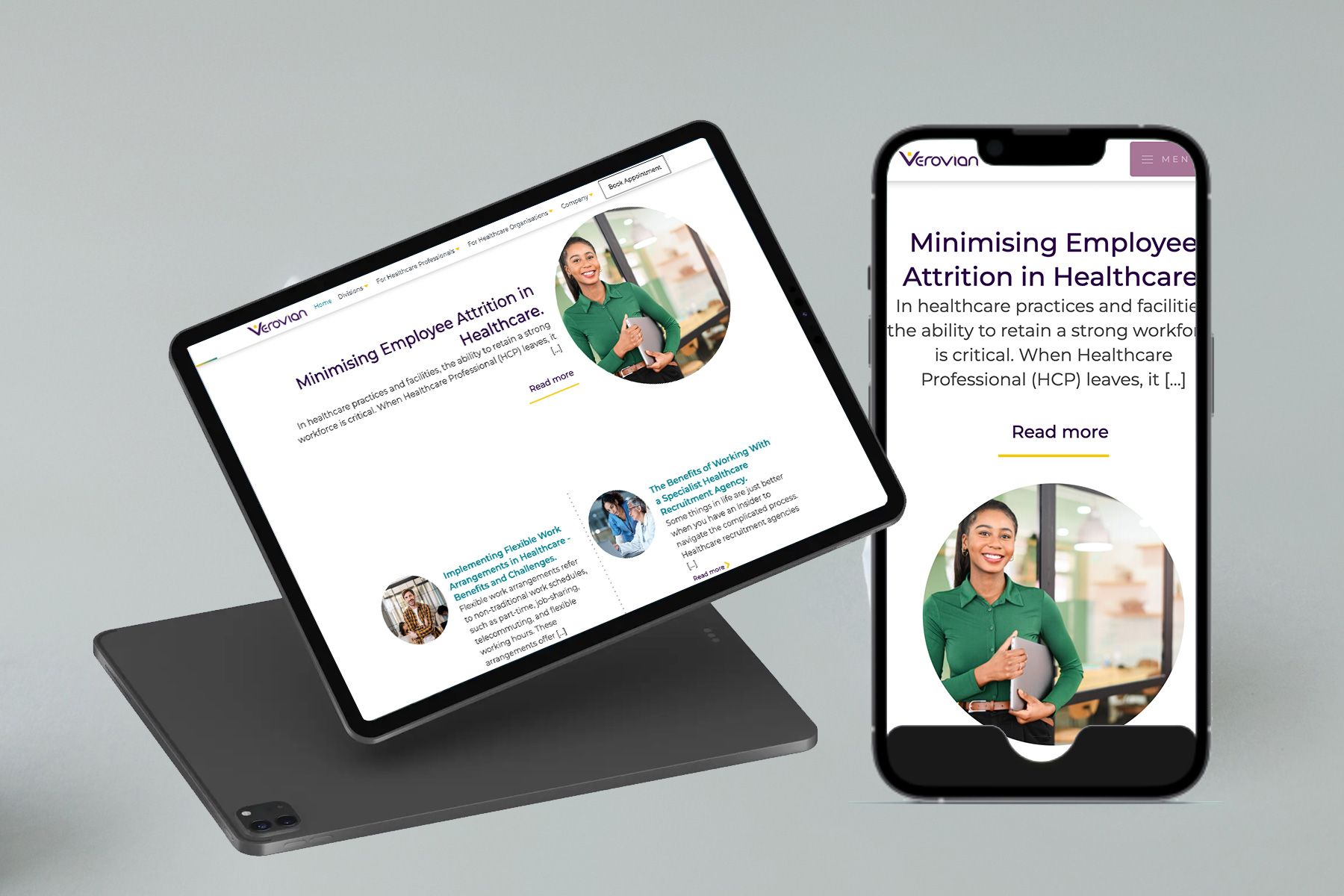
Verovian Locum Agency — Rebuilding a Healthcare Staffing Platform for Scale
Verovian Locum Agency connects NHS and private healthcare hirers with verified locum professionals across nursing, medicine, allied health, and social care. As the business scaled, the original website — built for a smaller operation — was failing to handle the volume and complexity of a growing multi-sided marketplace. Hirers couldn’t find what they needed. Locums couldn’t present themselves effectively. And the administrative backend was creating operational overhead that was slowing growth.
The Challenge. The brief required a complete information architecture rethink, not just a redesign. The platform needed to serve two distinct audiences simultaneously — healthcare hirers evaluating agency credibility and locum professionals managing their own profiles and availability. Both needed to feel at home on the same platform, with role-appropriate journeys that never confused one audience with the other.
What We Did. We began with a structured discovery phase — interviewing both hirer and locum user groups, mapping their respective journeys, and auditing the existing architecture against those needs. From that research, we designed a multi-site WordPress architecture separating the public-facing agency brand from the application-managed staffing platform — allowing each surface to be optimised independently while sharing core infrastructure. GDPR-compliant profile management, role-based access control, and a CMS structure that the Verovian team could manage without developer intervention were all built into the specification from day one.
The Result. A platform that presents Verovian credibly to NHS procurement teams, gives locum professionals the profile tools to present their qualifications compliantly, and gives the operations team the backend control to manage placements efficiently at scale.
Interior page screenshot
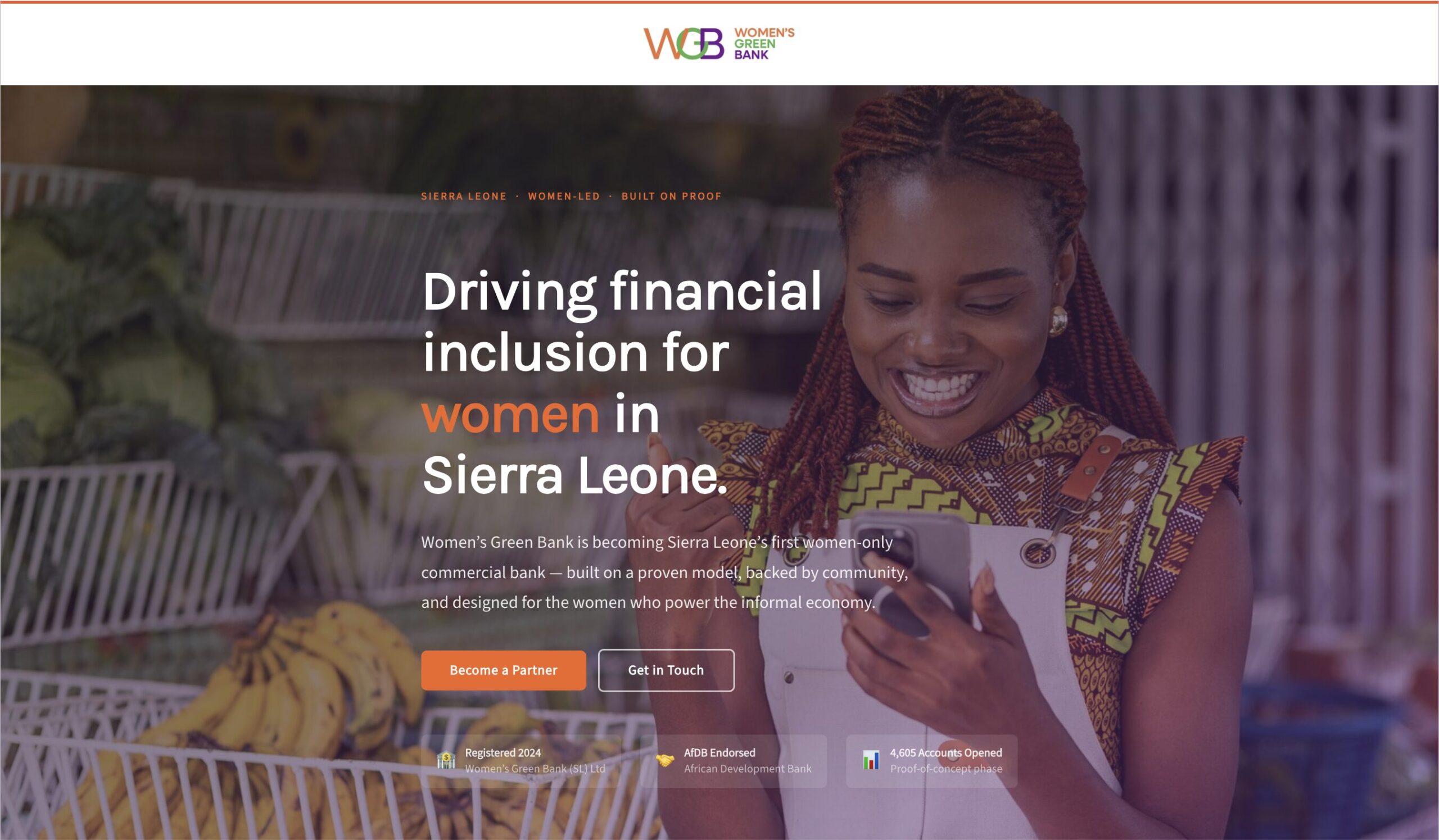
womensgreenbank.com
Women’s Green Bank — Digital Platform for Financial Inclusion
Women’s Green Bank is being built to serve the women who power Sierra Leone’s informal economy — market women, traders, producers, and entrepreneurs. Its focus is simple: access, dignity, and financial tools that work in real life. When Neo Creatives was engaged, the organisation needed a digital platform that could perform two completely different communication jobs simultaneously.
The Challenge. On one side, the platform needed to communicate institutional credibility to international development funders, impact investors, and development finance institutions assessing whether to commit capital. On the other, it needed to feel genuine, accessible, and trustworthy to the community of women it was built to serve — many of whom had limited digital literacy and were accessing the site on mobile data connections. These are not easy audiences to serve from a single platform.
What We Did. We designed a bilingual WordPress build with two clearly differentiated content layers — an investor-facing institutional layer with financial inclusion data, governance documentation, and development finance credentials, and a community-facing layer with simple, warm, image-led content about the actual lives and businesses of the women being served. Both layers shared the same visual identity and brand language but were architectured for completely different reading contexts and literacy levels. Donation and partnership inquiry integration ensured that both audience journeys could convert without friction.
The Result. A platform that earns credibility with international funders while genuinely connecting with the women it serves — bridging two worlds from a single digital home.
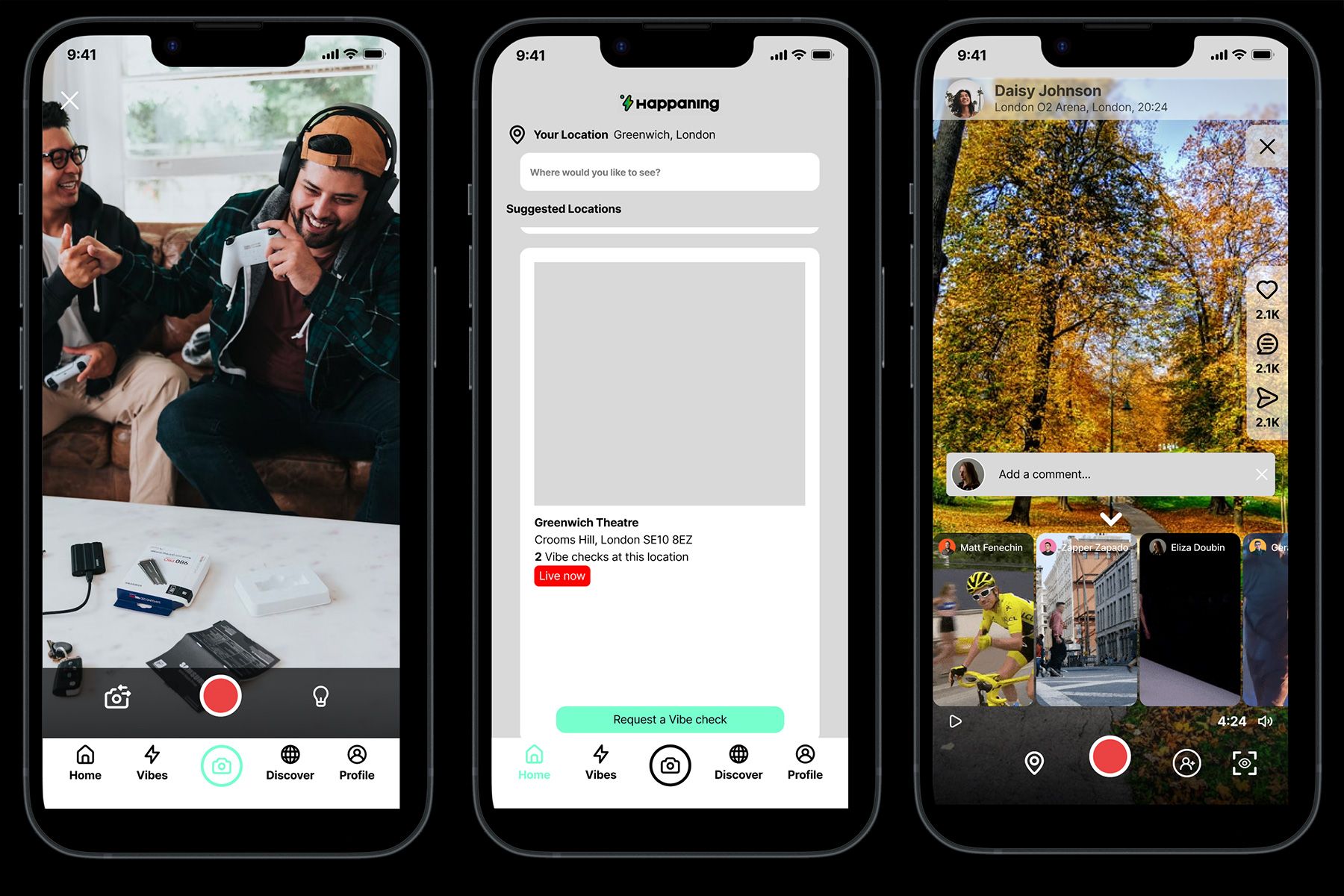
Happaning — Scaling a Consumer App from Beta to Market-ready
Happaning is a consumer platform for discovering and sharing real-time insights about events and locations worldwide — aspiring to help people Live More Fully, Connect More Deeply, and Experience More Joy. When Neo Creatives was engaged, the application was in early beta: the core concept was validated, but the user experience was not yet reliable enough to drive the retention and word-of-mouth growth the product needed.
The Challenge. The product team needed more than a UX designer — they needed a strategic partner who could manage the prototype development process, facilitate structured user testing, and create a rigorous framework for deciding which features to build next and in what order. Feature requests from multiple stakeholders were outpacing the team’s capacity to validate and prioritise them. Without a disciplined qualification framework, the roadmap risked becoming a wishlist.
What We Did. We took ownership of the prototype development cycle — guiding the application from beta through alpha with structured user testing sessions using Maze and MarvelApp. We designed and implemented a feature qualification framework that evaluated each proposed enhancement against two axes: user experience impact and development cost. This gave the product team a defensible, data-informed prioritisation model that reduced the noise of stakeholder opinion and focused engineering resource on the changes most likely to improve activation and retention.
Collaborative sessions with the multidisciplinary team ensured that design decisions reflected technical realities, and that customer-facing experiences were developed with input from the people responsible for building and maintaining them. The iterative cycle — design, test, qualify, build — was embedded as a repeatable process, not a one-time engagement.
The Result. A product experience substantially improved in usability and flow readiness, a feature backlog with clear priority rationale, and a team with an embedded process for managing future iteration at pace.
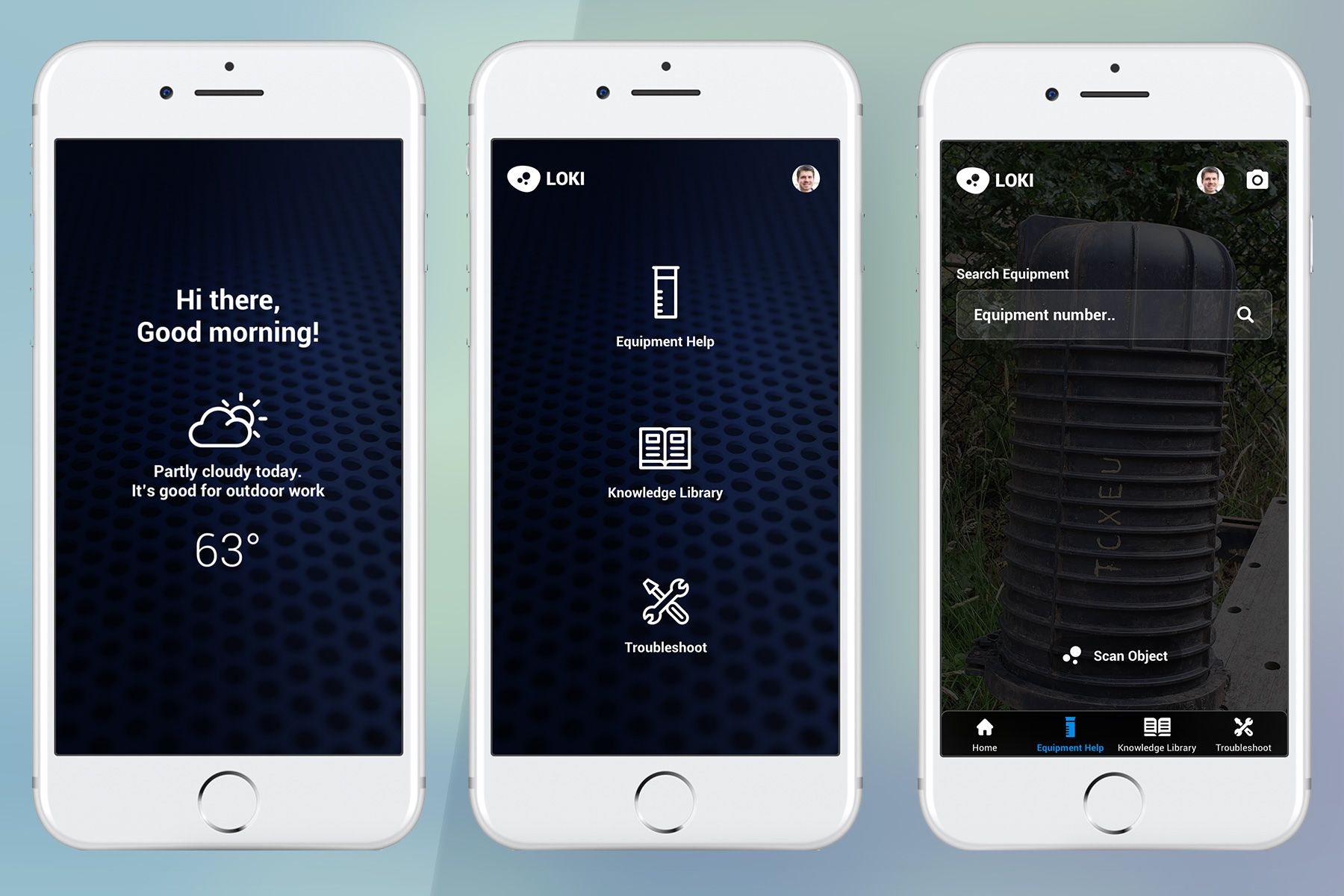
Openreach — Augmented Reality for Field Engineer Efficiency
In 2018, BT opened a new R&D lab in Suffolk to support providers of ‘special services’ as the UK transitioned to next-generation digital phone systems. The move created a significant technical challenge: field engineers needed to master new equipment and procedures rapidly, but traditional training was slow and difficult to deliver consistently across a geographically dispersed workforce.
The Challenge. How do you deliver expert knowledge to a field engineer standing in front of unfamiliar equipment, in real time, without calling a specialist back to base? The brief was to explore whether augmented reality could bridge the gap — reducing the learning curve, minimising service errors, and enabling engineers to log actions and access contextual guidance without leaving the field.
What We Did. We began with structured user research sessions engaging representatives from the field engineer user group — capturing their specific requirements, the real-world constraints of field working (lighting conditions, protective equipment, connectivity), and the exact failure points in existing training workflows. From those insights, we ideated a range of solution approaches before selecting and developing the most viable into a functional iOS prototype.
The prototype used a Machine Learning model trained to recognise specific Openreach devices from image composition — enabling the application to surface contextual service guidance the moment the engineer’s camera identified the relevant hardware. An action logging interface allowed completed steps to be recorded in real time, creating an audit trail and reducing post-visit administration.
The Result. A validated iOS prototype demonstrating that AR-assisted field engineering was technically feasible and operationally valuable within Openreach’s specific context — providing the evidence base for further investment in the approach.
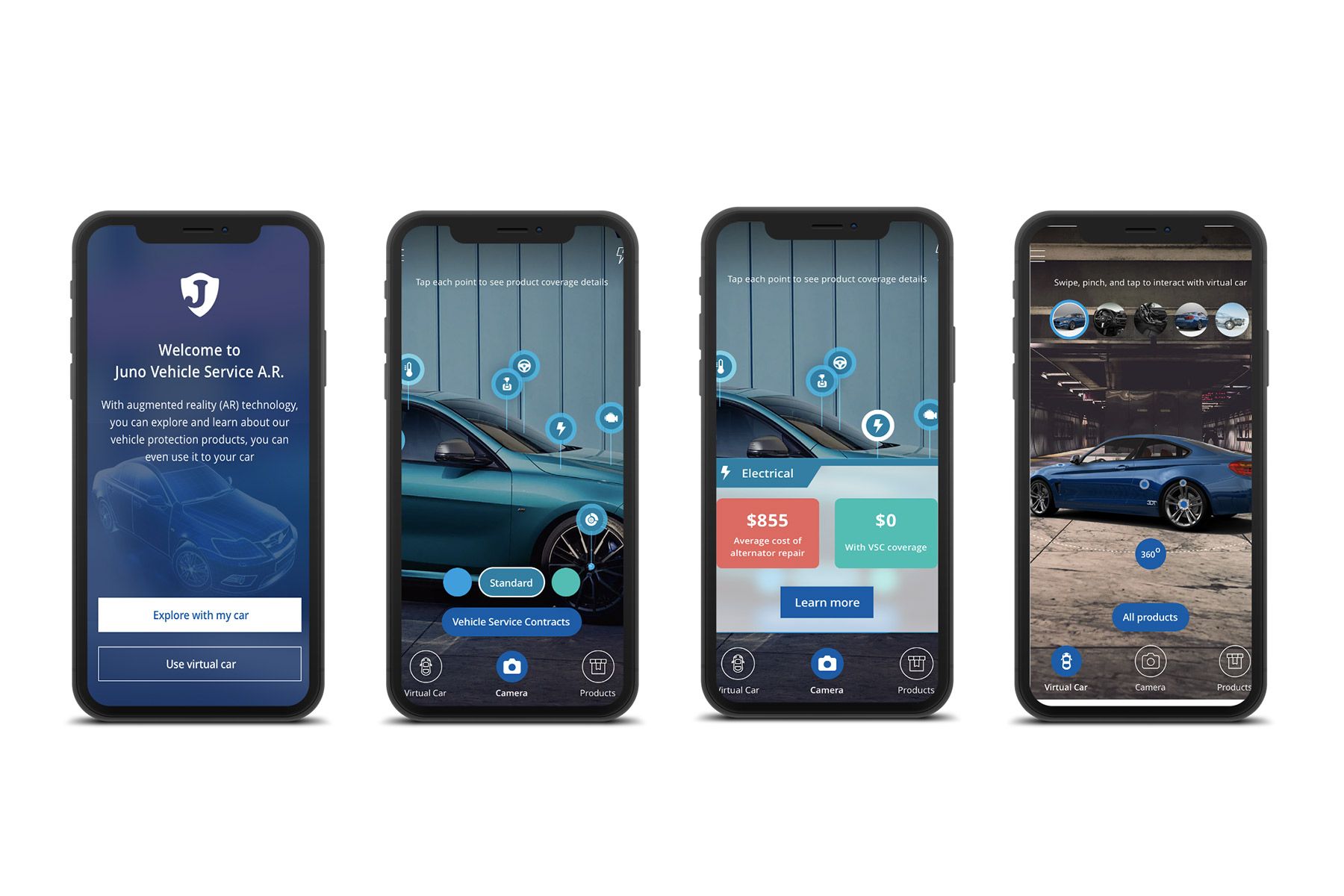
Zurich Insurance — Consumer AR Experience for Vehicle Protection Products
Zurich Insurance wanted to explore a novel way to engage and educate vehicle purchasers about protection products available at the point of vehicle purchase — specifically at dealer locations. Traditional brochure and sales conversation approaches were producing low engagement. The brief was to design an augmented reality experience that could demonstrate how protection products worked in a compelling, interactive way — either in front of a real vehicle or, where one was unavailable, using a virtual vehicle substitute.
The Challenge. The project sat at the intersection of consumer behaviour, insurance product complexity, and emerging AR technology maturity. The experience needed to be genuinely engaging for a consumer who had not asked to be educated about insurance — which meant the design had to earn attention rather than assume it. At the same time, the experience needed to convey accurate product information in a way that was legally appropriate and commercially effective for Zurich’s dealer partners.
What We Did. Neo Creatives managed the full design and validation cycle — from initial concept exploration through focus group testing to final prototype delivery. Multiple design directions were developed simultaneously and evaluated through micro-tests and in-depth focus group sessions, with each session generating specific insights that shaped the next iteration. This rapid cycle of concept, test, and refinement produced design options notable for their quality and variety.
The final designs defined the functional requirements for the development phase: interaction models, vehicle detection behaviour, product information display architecture, and the fallback experience for virtual vehicle contexts. The completed prototype — functional on both iOS and Android — was presented by Zurich to the CIO conclave at their international dealer conference in February 2020.
The Result. A validated, CIO-approved AR prototype demonstrating genuine consumer engagement with vehicle protection products at point of purchase — delivered on time for a major international industry event.
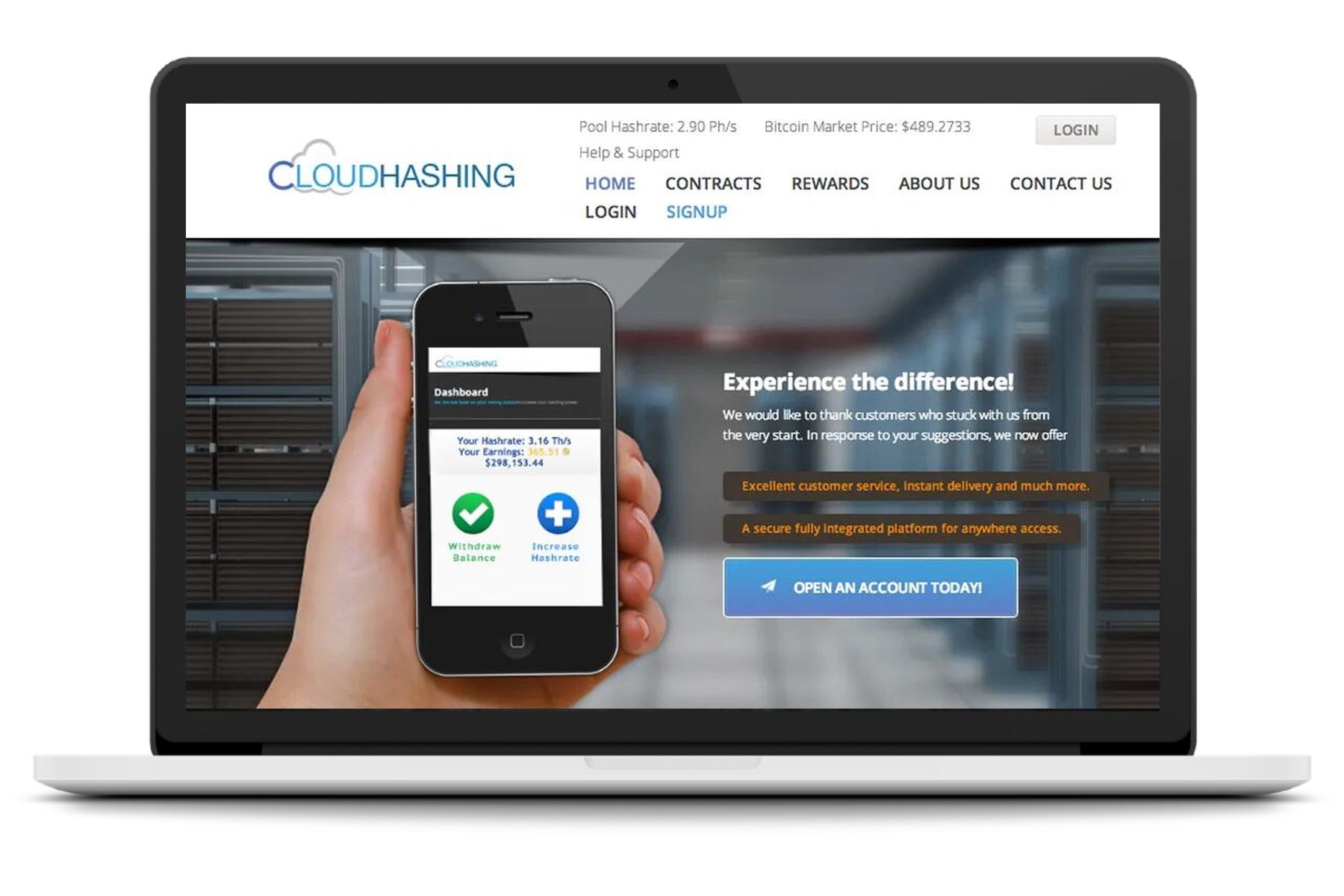
Cloud Hashing — Building One of the World’s First Bitcoin MaaS Platforms
In 2012, Bitcoin was still an obscure technology known mainly to cryptography researchers and a small community of early adopters. Cloud Hashing was one of the first companies to see that the growing complexity of Bitcoin mining — and the hardware investment it required — created a market for mining-as-a-service: a model that let individuals and organisations participate in Bitcoin mining without owning or operating the hardware themselves.
The Challenge. Building credibility and acquiring customers for a product in a market that barely existed yet — while simultaneously managing the technical complexity of building the platform infrastructure, handling the brand, managing digital marketing, and generating the PR coverage that would give the business the reach it needed to grow at speed in an entirely new category.
What We Did. Neo Creatives led the full digital buildout — brand identity, web design and development, digital marketing strategy, public relations, and content strategy. The website needed to communicate a technical product accessibly to a non-technical audience while establishing the technical credibility that early Bitcoin enthusiasts demanded. We built a platform that could handle the volumes generated by growing press coverage and executed a PR strategy that placed Cloud Hashing in Bitcoin-focused publications and mainstream technology media at a time when the sector was beginning to attract serious attention.
The Result. Cloud Hashing became one of the largest Bitcoin mining companies worldwide. In May 2014, it merged with HighBitcoin to create PeerNova — and continues to operate the CloudHashing brand to this day. A landmark project that placed Neo Creatives at the earliest frontier of what would become one of the defining technologies of the decade.
Ready to build a case
study of your own?
Book a free 30-minute discovery call. We’ll apply the same rigour and creativity to your challenge that produced the outcomes above.
No commitment · Responds within 24 hours · London GMT · Global projects welcome