Openreach: augmented reality for field engineer efficiency.
Expertise does not scale by hiring alone. This is how a machine learning powered prototype proved that augmented reality could put expert guidance in front of field engineers at the moment of work, and what it teaches about proving innovation inside a large enterprise.
The knowledge was there.
The engineer was here.
Openreach’s field engineers keep national infrastructure running, working on equipment of every generation in every condition the weather can supply. The expertise to handle any situation existed within the organisation, but it was unevenly distributed: deep know-how concentrated in experienced heads, while the engineer standing at the cabinet might be years from acquiring it.
The question we were engaged to answer was precise: could augmented reality, powered by machine learning, deliver that expert guidance to any engineer, on site, in real time? Not as a vision deck, but as working proof.
Three problems,
stated plainly
We write the problems down before we design anything. If a proposed solution does not answer at least one of them directly, it does not make the build.
Know-how lived in a few heads
Experienced engineers resolve in minutes what others work through slowly, but experience cannot be copied onto a rota. Every gap between an engineer’s knowledge and a job’s demands cost time, repeat visits, and escalations.
Guidance lived in documents and phone calls
The support that did exist, manuals, procedures, and calls back to base, sat away from the task itself. An engineer with hands on equipment cannot usefully consult a document, and every escalation call occupied two people to progress one job.
Enterprise investment needed evidence
Before a large organisation commits to a technology, it reasonably asks whether the idea survives contact with reality. Could a device actually recognise field equipment and overlay accurate guidance, outdoors, in real time? Nobody could invest until something demonstrated the answer.
Qualifying solutions
before applying them
We started in the field, not the lab, researching how engineering work actually unfolds: what an engineer sees on arrival, where uncertainty enters, and at which moments guidance would genuinely change the outcome. The moment of work, hands busy, attention on the equipment, became the design target, because help that interrupts the work is help that goes unused.
We researched the technical feasibility with equal discipline: whether machine learning could recognise the relevant equipment reliably enough on a handheld device, and whether guidance could be overlaid accurately in real conditions rather than demo conditions.
The prototype itself was qualified by a strict scope rule: build exactly enough to answer the enterprise’s question, and nothing more. A prototype is an instrument for making a decision, and every feature beyond the decision’s needs is cost without evidence.
Recognise the equipment,
overlay the expertise
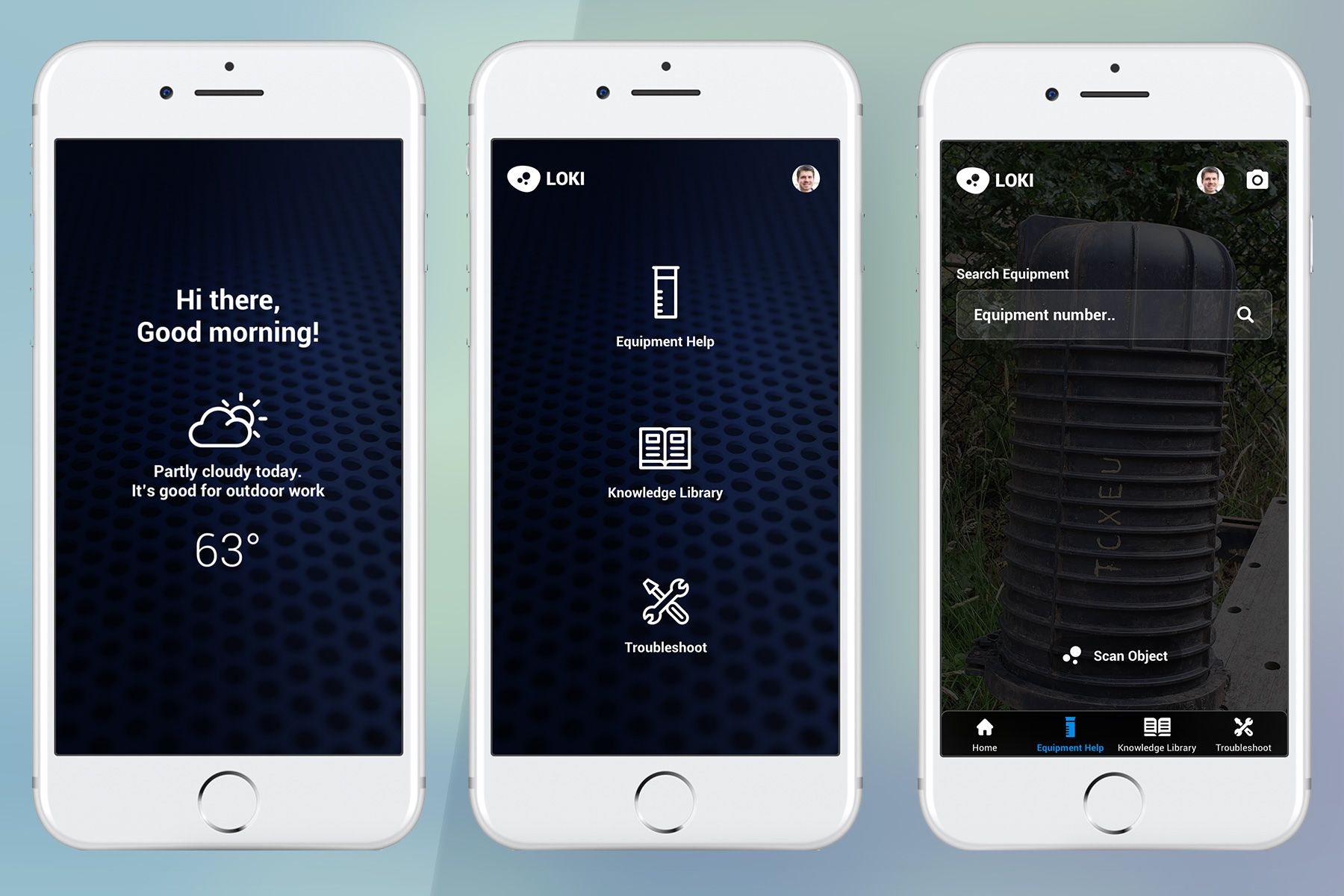
We built a machine learning powered mobile prototype that recognises field equipment through the device camera and overlays expert guidance directly onto what the engineer sees, in real time. The expertise arrives at the moment of work, on the equipment itself, without the engineer breaking away to a manual or a phone call.
The experience was designed for field reality rather than office demos: quick to raise, glanceable, and useful to a person whose hands and attention belong to the job. The prototype’s purpose was proof, and it was engineered to make the feasibility question answerable beyond argument.
What changed,
and what it means
The prototype proved the case: expert guidance can be delivered to a field engineer in real time, on site, through a device already in their pocket. Openreach gained the evidence an enterprise needs to evaluate investment seriously, grounded in a working demonstration rather than a concept deck.
What this project teaches
beyond this project
These are the four lessons we would put in front of any business owner or stakeholder facing a similar challenge.
1. Put help at the moment of work
Knowledge stored in manuals, wikis, and training days is knowledge an occupied person cannot reach. The transformative move is relocating guidance to the exact moment and place of the task. Every organisation has an equivalent: the answer is written down somewhere, and the person who needs it has their hands full.
2. Scale expertise instead of only hiring it
Experienced people are scarce, expensive, and slow to grow. Technology that carries their judgement to less experienced colleagues multiplies the experts you already have, and unlike hiring, it compounds: every improvement reaches the whole field force at once.
3. A prototype is an instrument for a decision
The discipline that made this engagement work was scoping the build to the question it existed to answer. Prototypes fail when they drift toward being small products. Define the decision first, build exactly enough evidence to make it, and stop.
4. Design for the frontline’s reality, not the demo room
Gloves, weather, one free hand, and divided attention are design requirements, not edge cases. Frontline tools earn adoption by respecting frontline conditions, and a solution that only works in a meeting room will only ever be used in one.
Where does your expertise
fail to reach?
If your best people’s knowledge is trapped in their heads or buried in documents, technology can carry it to the moment of work. Tell us where the gap is and we will scope the proof.
No commitment · Responds within 24 hours · London GMT · Global projects welcome